
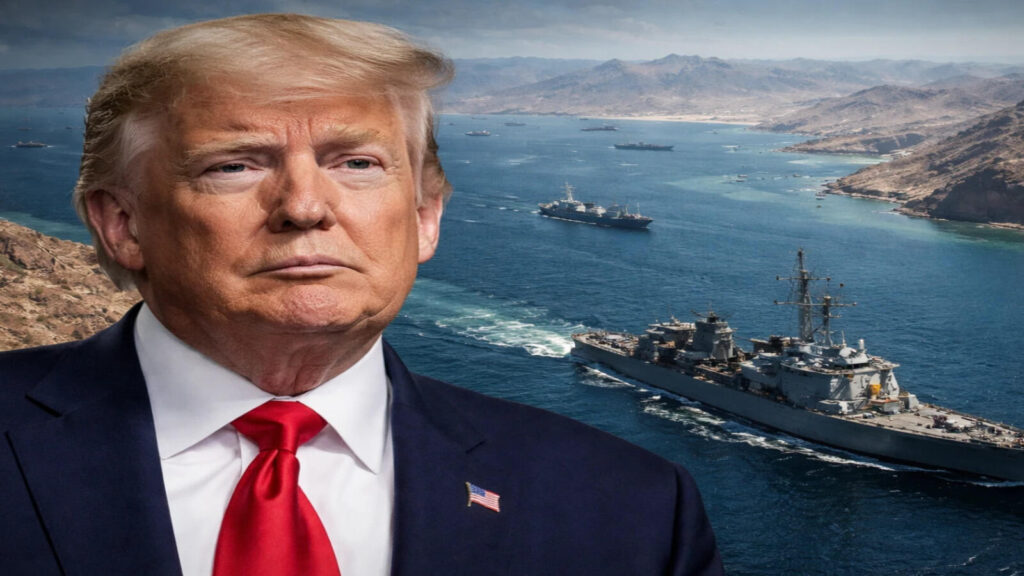
Is Trump Using the Strait of Hormuz Blockade to Push U.S. Oil Globally?
The recent tensions surrounding the Strait of Hormuz have sparked a global debate: Is former U.S. President Donald Trump using the blockade as a strategic move to force countries into buying American oil? At first glance, the idea sounds like a conspiracy theory. But when we look deeper into geopolitics, energy markets, and global power dynamics, the situation becomes far more complex.
Why the Strait of Hormuz Matters
The Strait of Hormuz is one of the most critical oil transit routes in the world. Nearly 20% of global oil supply passes through this narrow waterway. Any disruption here doesn’t just affect the Middle East—it sends shockwaves across the entire global economy. Countries like China, India, and even European nations heavily depend on oil shipments passing through this route
The Official Reason: Pressure on Iran
The primary justification given by the U.S. is to apply economic and political pressure on Iran.
By restricting oil exports from Iran, the U.S. aims to:
- Reduce Iran’s revenue
- Limit its regional influence
- Push it toward negotiations on nuclear and military issues
From a geopolitical perspective, this aligns with long-standing tensions between the two nations.
The Hidden Economic Angle
While the official stance focuses on security and diplomacy, there’s no denying the economic ripple effects—especially for the United States.
The United States is now one of the world’s largest oil producers. When supply from the Middle East becomes uncertain, global oil prices rise. And when prices rise, American oil becomes more profitable and attractive to buyers.
So, is the U.S. benefiting?
Absolutely. But benefiting from a situation is not the same as creating it solely for that purpose
Can the U.S. Replace Middle Eastern Oil?
This is where the theory starts to weaken.
Even though the U.S. produces massive amounts of oil, it cannot fully replace the supply coming from the Gulf region. Countries still rely on multiple sources, including Saudi Arabia, UAE, and others. So while American oil can fill some of the gap, it cannot dominate the global market overnight
Global Impact: More Than Just Oil
The blockade doesn’t just affect oil trade—it creates wider consequences:
- Rising fuel prices worldwide
- Increased inflation
- Economic uncertainty
- Risk of military escalation
For developing countries like Pakistan, this can directly translate into higher petrol prices and increased cost of living
So, What’s the Real Truth?
The idea that Trump is using the blockade purely to force countries into buying U.S. oil is an oversimplification.
A more realistic view is:
- The move is primarily geopolitical, aimed at weakening Iran
- The economic benefits for the U.S. are a secondary advantage
- Global oil markets are too complex to be controlled by a single country
Final Thoughts
In global politics, decisions are rarely driven by a single motive. The Strait of Hormuz situation is a perfect example of how power, economics, and strategy intersect.
While the U.S. may gain from rising oil demand, the blockade is not just about selling oil—it’s about influence, control, and reshaping global dynamics.