
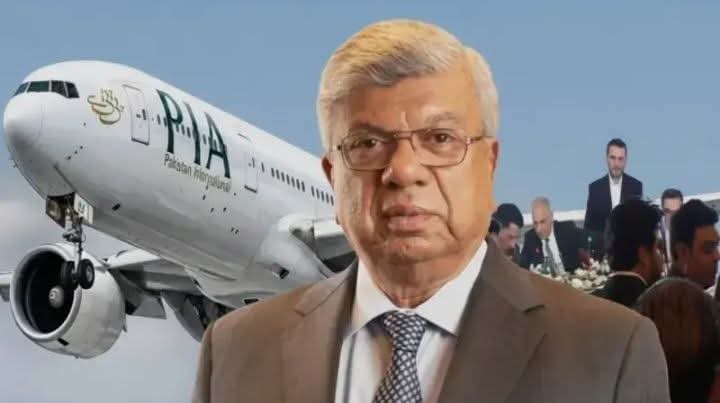
Arif Habib’s journey is not just the story of a successful businessman—it is a powerful narrative of vision, resilience, and long-term commitment to Pakistan’s economic future.
Born in 1953 in Karachi into a well-known Memon family that migrated from India to Pakistan in 1947, Arif Habib grew up with a natural inclination toward trade, numbers, and financial systems. From an early age, he displayed a sharp understanding of business dynamics—an interest that would later shape one of Pakistan’s most influential investment legacies.
Arif Habib: From a Young Broker to the Architect of Pakistan’s Historic PIA Privatization
After completing his education, Arif Habib stepped into the world of securities and stock brokerage. In 1970, he began working as a broker at the Karachi Stock Exchange, where his deep market insight, discipline, and ethical approach quickly set him apart. What started as a modest career move soon evolved into a transformational journey for Pakistan’s financial sector.
Building an Investment Empire
Over the decades, Arif Habib transformed his brokerage success into a diversified corporate powerhouse—Arif Habib Corporation Limited (AHCL). Under his leadership, the group expanded into financial services, real estate, energy, fertilizers, steel, and education, becoming one of Pakistan’s most respected investment conglomerates.
His leadership credentials are equally impressive. He has served multiple terms as Chairman/President of the Karachi Stock Exchange and is a founding member of the CentrBal Depository Company (CDC). Beyond the private sector, Arif Habib has played a key advisory role in national economic policymaking through institutions such as the Privatisation Commission and Board of Investment, contributing to Pakistan’s structural economic reforms.
PIA Privatization 2025: A Historic Turning Point
The Challenge
For years, Pakistan International Airlines (PIA) struggled with mounting losses, governance issues, and political interference. Multiple privatization attempts failed, leaving the national carrier in financial distress and public concern.
The Breakthrough
On 23 December 2025, history was made.
The Government of Pakistan launched a long-awaited privatization process, attracting bids from major private-sector groups. In a transparent and competitive bidding environment, the Arif Habib Group emerged victorious, securing 75% controlling shares for Rs. 135 billion, surpassing other strong contenders, including the Lucky Cement Group.
This marked one of the most significant privatization deals in Pakistan’s history.
Key Highlights of the Deal
✔️ 75% controlling stake acquired for Rs. 135 billion
✔️ At least Rs. 10 billion received in cash by the government
✔️ Remaining investment allocated for PIA’s restructuring and revival
✔️ Part of broader IMF-backed economic reforms
✔️ Job protection for employees for a minimum of one year
A Vision for the Future of PIA
Arif Habib’s ambition goes far beyond ownership. He has outlined a clear revival roadmap, including expanding PIA’s aircraft fleet from 38 to 65 planes, strengthening domestic and international routes, improving service standards, and restoring global confidence in Pakistan’s national airline.
“PIA is not just an airline—it is a national asset with immense potential. Reviving it will benefit Pakistan’s economy, create jobs, and attract future investors,” he stated.
Why Arif Habib’s Story Matters
✔️ Among Pakistan’s most influential investors
✔️ A central figure in the largest and most symbolic privatization in the country
✔️ Chairman and Director across multiple industrial and educational institutions
✔️ A trusted voice in economic reforms and privatization policy
Conclusion:
A Visionary Who Invested in PakistanArif Habib’s life reflects more than financial success—it represents belief in Pakistan’s potential. From a young stockbroker to the leader behind PIA’s historic revival, his journey inspires confidence, hope, and forward momentum.As Pakistan stands at a critical economic crossroads, leaders like Arif Habib demonstrate how private-sector vision, transparency, and long-term thinking can reshape national institutions and open new doors for sustainable growth.His story is not just about business—it is about rebuilding trust in Pakistan’s future